Insta: cccskindoc

Showing posts with label Face. Show all posts

Monday, 7 May 2018

100 Years of Acne Treatments


From 1910s to 2010s.


A lot are still in use and proven effective over time, such as topical retinoids from 1970s and oral retinoids in 1980s.


My favourite is 2000s' acne extraction and cortisone shots. What about you?


Tuesday, 31 October 2017

Whitening laser and gutatte pigmentation

Happy Halloween!
Did you get scare by this pale face of mine? Hahaha.

But white or fair skin has been recognised as beauty in Asian for years. Top sales of skin care products in Asian? I would imagine it to be one of those whitening products rather than sunscreen.

Is whitening laser safe?

When you mentioned "whitening laser", I assume you are referring to Q-switched Nd-Yag 1064nm laser.

Q-switched Nd-Yag has become very popular nowadays because it offers to treat many pigmentation problem and rejuvenation by stimulation of collagen production at the same time. 1064nm has been said to be the most suitable whitening wavelength for Asian skin as the risk of postinflammatory hyperpigmentation is small. Nowadays, you get to do it everywhere, in beauty saloon, in medispa, in general clinics. And it is often marketed as "lunch time laser" as it usually give very short down time (some redness is what you may get) especially when administered in low fluence using large spot size, or what is also known as toning laser.

As this "whitening and rejuvenation laser" getting more common, some people found instead of getting a homogenous white and fair skin, they get white spots. Some people get this even after just 4-5 times of laser, not necessarily after years of repetitive treatment. (Not all Q-switched Ng-Yag lasers are the same, even if they are of the same 1064nm wavelengths) The "solution"? Some people end up going for more and more whitening laser! Instead of monthly, some started to do it every 2 weeks, and every week, and every other days, and even everyday! (This happened especially for those who bought "packages of laser" to save cost or perhaps some centres who offered free rescue treatments.) The consequences, from one white spots to multiple white spots to lacey and mottled appearance.

We do not know why this happened. Perhaps the cumulative laser has destroyed the melanocytes (pigment producing cells) in the skin. What is horrible with this condition caused by "whitening laser" compared to other types of laser such as CO2 resurfacing laser and ruby laser is that this mottled or guttate pigmentation is very difficult to treat. Doctors have tried using topical whitening cream, steroids, calcineurin inhibitors and phototherapy with narrow band ultrabiolet B and various other modalities but many remained the same after years and probably going to be permanent!

No, I'm not saying Q-switched Nd-Yag laser is all evil and no good. Neither did I say you should not do it at all. It has helped many with pigmentation problems if done in a careful way.

I'm asking you to be just a little more careful. And I am definitely against buying or selling large packages of laser treatments as marketing strategies. Please do go to a good doctor who know what exactly he or she is doing. Go to a doctor who will be honest with you what are the pros and cons and what to expect. Very few treatments under the sun is without a single risk since even doing nothing and just staying under the sun is with skin cancer risk as well. As long as you know what to expect, when to put a stop to it, what remedial measures to be taken, you should be fine, most if not all the time.

If you have bought packages of "whitening laser", (yes, you may be heading for problem) and do not want to "waste" it. What I can advise you to do is that do not do it too frequently and closely monitor your face. If you notice white spots starting to appear, stop the laser treatment. do not go for further laser treatment even if you still have another 5 or 10 more treatments to go.  (What? You still have 20 over sessions? What a big "packages"! You must be kidding me!) Use sunscreen diligently and keep your fingers crossed, perhaps it is not permanent yet.

Read some cases from Singapore here.

Saturday, 28 October 2017

Skin Care Routine for Dull and Uneven Skin Tone

My skin is dull and I have uneven skin tone. What can I do about it?

Pigment problem is so common, which is why foundation, concealer, BB cream and CC cream are essential items in most ladies' makeup bag.

Try out this simple yet effective skin care routine to help brighten up your skin and smooth-en your skin tone.

Morning:
1. Gentle cleanser
2. Antioxidant + sunscreen

Re-apply sunscreen 2 hourly throughout the day. (Yes, I know it isn't easy, but good skin doesn't come the easy way for most people after 30 years old.)

Night:
1. Makeup remover / gentle cleanser
2. Retinoids or retinol
3. Moisturiser

A few reminders:
  1. Prescribed topical retinoids (common acne medication) is more effective but may cause irritation (dry, red and even skin peeling for some). Start with a pea size and observe your skin reaction for a week or even two before increasing the amount.
  2. If you have sensitive skin and are trying out new skin care products, start one by one, a week or two apart, just in case you develop any skin reaction, it's easier to identify the culprit.
  3. If "water" is your usual "morning cleanser" and you have no skin problem, go ahead, it makes your routine even simpler. Personally I do not use cleanser except makeup remover and I strongly feel cleanser isn't for everyone, especially if your skin is not too oily. But please do remove your makeup completely.

Thursday, 19 October 2017

How to keep your skin hydrated?


Malaysia is a humid country, yet we keep on seeing people, with underlying skin problem or without, coming with dry and even cracked skin.

Here's a few tips on how to keep your skin hydrated.
  1. Drink water, whenever you feel thirsty. Sounds dumb but how many of us forget to listen to our body cues when er are too engrossed in our work? We lose water in our sweats, urine, bowel movements and even while we breathe. A standard recommendation is to drink 6-8 glasses a day but really there is no "standard" for everyone because we are all different. Exactly how much water one needs depends on many factors from how much you exercise to your metabolic rate to how dry the environment is. Drinking too much water to the extent of water toxicity can lead to confusion and even coma and death. (But who on the earth in their right minds would drink so much water!?)
  2. Talk short cold or lukewarm water shower rather than long hot baths (if you have eczema, keep the shower shorter than 5 minutes).
  3. Use gentle cleanser instead of soap bar or antiseptic shower gel.
  4. Apply generous amount of moisturiser immediately after baths (well not exactly immediate, within 3 minutes or when your skin is still damp).
  5. Use paper mask. Paper mask is a great and yet economical invention of facial skin care. If not properly use, it may over hydrate the skin around the eyes making you look puffy though.
  6. Use fabric gloves and socks after putting on moisturiser if you have dry hands or feet. This is a form of occlusion which will help your skin absorbs the moisturiser better, keep the moisture longer besides keeping your bed sheet and blanket clean.
  7. Avoid direct sunlight, smoking, sauna.

Facial Mist Spray

"I hate applying cream and I'd rather use facial mist spray to hydrate my skin."


Using facial mist spray to hydrate the skin? You must be kidding me.

Water doesn't stay long on the skin, whatever being added in, hyaluronic acid or essential oil. It stays at best 3 minutes? Or 5 minutes? Depending on the additives and also the moisture in the surrounding air. Whatever it is, it is way too short to give adequate hydration. And nobody is going to carry a spray and spray every 30 minutes throughout the day! I don't.

If you mist your skin with water or a water-based product, IT WILL MAKE THE WATER IN YOUR SKIN EVAPORATE OUT! Yes, and this means it will leave your skin even more dehydrated and dryer than before.

How should facial mist spray or water spray be used?

You should apply a moisturiser when your skin is still damp, preferably an occlusive moisturiser that will prevent the water from evaporating to the environment.  Occlusive moisturiser are usually on the heavier side as they are often more oily. Examples of occlusives include petrolatum, triglycerides, beewax, lecithin, sequalene and various oils. Yes, some of these can be greasy and may not be good for acne prone skin.

Other ways that facial mist spray can be used include
  • Set the make-up
  • Refreshing stress relief especially after a long tired day
  • As a "toner" to clean and soothe irritated skin

Thursday, 5 October 2017

Dark Eye Circles


Why are dark eye "circles" rather than semicircles? 

Probably because it can affect the upper eyelids in some people, not only the under eyes area.
 

Medical terms used for dark eye circles include periorbital melanosis, periorbital pigmentation, periocular hyperpigmentation, periorbital darkening etc.
Eye drops for glaucoma may cause temporary dark eye circles too. This is usually reversible once the medications are no longer needed.


Can you help me with my dark eye circles? 

As with any other medical concern, we have to first see the cause before discussing on treatment. And in many instances, it is more than just what some eye cream can solve.

There are many types and many ways of classifying dark eye circles. But generally dark eye circles can be cause be actual pigmentation (usually brown in colour), prominent vessels (usually bluish or purplish) and structural (skin colored), and frequently a combination of a few factors.

Aging and skin thinning, excessive sun exposure, fatigue and eye strain are among the most common cause of dark eye circles.

While patients are usually more concerned over the tired look, doctors should always look out for
💉Systemic causes (presence of other more severe medical illness)
💉Atopic diseases (often related with frequent rubbing)
💉Chronic sinusitis
💉Skin diseases
💉Nutritional deficiencies
💉Sleep disturbances
💉Use of hormonal supplements / products


Certain medications such as glaucoma eye drops may cause dark eye circles too.

Treatment usually involve not a single visit. All contributing factors should be identified and if possible get treated. 

Cosmetic manufacturers often overly optimistic with their promises in dark eye circle treatment. Treatment with over-the-counter eye creams are unfortunately rarely successful. Apart from medical grade topical creams (often include a sunscreen and a bleaching agent, or chemical peels), botulinum toxins, fillers, lasers and even surgeries may be required. 

Thursday, 28 September 2017

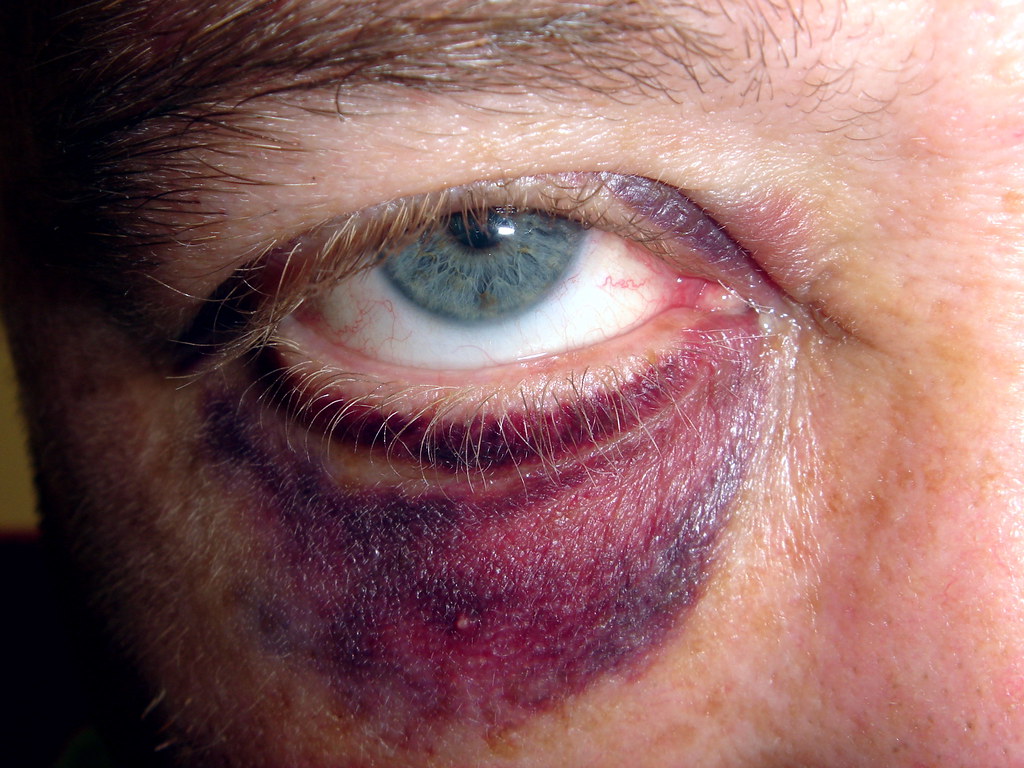
Reducing that bruise

I want to go for filler injections. My doctor told me one of the potential side effects is that I could have bruises under my eyes. I know this should be temporary but I'm very worried as I usually bruise quite badly and easily with minor fall. Is there any way to reduce the chance of me bruising?

From a simple needle prick to procedures like filler, or even major surgery, every procedure that manipulate your skin potentially causes bleeding and bruising.

Here's how you can do to reduce the chance or the severity of bleeding and bruises.
✅ Avoid aspirin, NSAIDS (a type of painkillers), vitamin C & E, fish oil a week before
✅ Stop alcohol and garlic 2 days before
✅ Avoid excessive exercise immediately before and 2 days after
✅ Avoid flight 1-2 days if possible (change of cabin pressure)
❓Pineapples contains bromelain and may help to reduce bruising

Thursday, 14 September 2017

Acne in mature skin


I am in my late 40's. And I still get acne. Why?

Contrary to popular belief, acne isn't just a problem of the teenagers. Young babies can get acne (known as infantile acne, often temporary). Most people do not get severe acne after menopause but yes, you may still get acne at a mature age.

The reason you get acne is probably not much of a difference to that of the teenagers. But there may be other things that you would want to consider if you have never had acne and suddenly suffering from severe breakout at this point of time.


  1. Did you recently change your skin care products? Some people changed their skin care products to those "designed for mature skin" which are usually more greasy and may block the pores.
  2.  Did you recently change your skin care routine? Did you just started on a face scrubs? Or tried a new facial treatment?
  3. Did you recently go travelling?
  4. A recent change of job?
  5. Could it be something else rather than a true acne? Some skin diseases may mimick acne, and these include acne rosacea, sebaceous hyperplasia, milia and bacteria folliculitis.


Consult a dermatologist if you are not sure.

Wednesday, 30 August 2017

Quick Fix for Acne

I've picked a pimple and it became red and swollen. I have an event coming up in 3 days. How do I speed up the healing process?

Are there quick fix for acne? 

The answer is yes. But we will need to assess the condition of the "red and swollen" acne to see if which fix is for you.

If the acne was "properly picked", the picking itself should have shortened this particular acne's "lifespan". You can hasten the recovery further by applying a non-comedogenic moisturiser.

By "properly picked", I mean it should be picked hygienically and completely without any residue or pus being left behind.

If the acne was not "properly picked", and has "swollen" and might even appear to be forming up a cyst, then you might need intralesional steroids (which means injecting low concentration of steroids directly to the cyst itself) to reduce the redness and the swelling quickly.

If the acne was not ready to be picked, light and laser treatment could be helpful to hasten its maturity so that it can heal faster.

If in doubt, it is always good to pay a visit to your nearest dermatology facility. If that is not possible before your event, a professional concealer could do the trick! ;P

Wednesday, 16 August 2017

Facial Eczema

I have eczema since childhood. I believed I have my eczema inherited from my father. My eczema has been mild all these while until my pregnancy when it suddenly become very severe. I am now 5 months post delivery but my eczema is getting worse each day. It is all over my face and I feel very miserable and depressed.

I have visited numerous doctors and tried numerous creams, steroids and non-steroids, but each time, it came back after a few days. None of the medicine heals. I expressed my frustration on facebook, and after recommendations from another mother, I seek treatment at a traditional chinese medicine centre from Taipei. I was given a soap, a spray and some creams. It helps a bit but still comes back. I was told I can't take medicine because I am still breastfeeding.

I lose my temper easily and totally lost my confident to get out of the house. What can I do?

Hugs. You are not alone. Eczema can be very frustrating. Especially when it involves the face of a young mother.

The Basics

Eczema is a group of inflammatory problem involving skin that is usually itchy. There are many types of eczema.

The one that you seems to have from your description maybe:
  • Atopic eczema: typically starts young, with personal or family history of atopy, associated with defect in skin barrier and immune dysfunction
  • Contact dermatitis: typically persistent and relapsing, particularly if the culprit allergens or irritants is not identified, and appropriate skin care is not in place
A little detective work

Could this be the culprit?
  • Nickel and chromium, not necessarily from costume jewelleries, don't forget the mobile phones (Not common, but people can be allergic to silicone cover of the phone as well)
  • Preservatives and fragrance in cleansing agent including shampoo, cleanser, mouth wash.
  • Skin care products
  • Cosmetics 

Important points:

A product that has been used for several years may not necessarily be safe because:
  • We are not born with allergy, allergy develops over time.
  • The manufacturers can change their formulas to include different ingredient and may not states it clearly.
Don't forget indirect applications can come from the touch of your own hand.

How to get better? 

Management plan of eczema needs to be personalised. Things that need to take into considerations include the stage and severity of your condition.

If your skin is weeping and oozy, you may need temporary usage of astringents, baths or even draining of water blisters. Viral and bacterial infections, if present, must be treated.

Generally, steroids and non-steroidal products help to reduce inflammation, itch and all the suffering that you are having right now.

Moisturised your skin as often as you can. Choose a hypoallergenic moisturiser. Choose an occlussive moisturiser that coats and protects your skin, preventing transepidermal water loss. Choose a therapeutic moisturiser that will help to restore the defective skin barrier.

Avoiding the culprit should get you better within a week or two although it might take months to clear up completely. If you are really not sure which is the culprit, patch testing may help.

You might be interested to read about:
Food and Eczema
Color cosmetics and Eczema
Steroid fear 
Do's and Don'ts of Using Topical Steroids
Bathing in Eczema
Acne and Eczema

Tuesday, 15 August 2017

Acne or Eczema

My face itch with many small red bumps. Is this acne or eczema?


Acne is not typically described to be itchy. In many textbooks, itch is not mentioned as a symptom of acne at all. Having said that, a few studies have shown that 50-70% of people with acne do complain of facial itchiness, in particularly when they sweat, or in heat, or under dry air or when they feel stressful.

Eczema is usually itchy. One senior consultant dermatologist that I know loves to say, "If it ain't itchy, it is not eczema". Is there any new skin care, paper masks, makeup and any other items that you have recently use on your face prior to the onset of the problem? Or did you just have a facial treatment lately? Having said that, all that itch may not be eczema too.

Other possible "itchy red bumps" that may appear on face include rosacea, seborrheic eczema, bacterial folliculitis, pseudofolliculitis barbae, miliaria, perioral dermatitis etc.

Do me a favour. If you can't figure it out it's acne or eczema in the next one to two weeks, and if it's not going away, please consult your nearest dermatologist.

Saturday, 12 August 2017

Moisturiser for oily skin? Yay or Nay?

I have oily skin with frequent acne breakout. Do I still need moisturiser?

Many people with acne reported that their facial skin is "oily", "greasy", "clogged up", "an additional layer on skin" because of the extra sebum production.

But the answer is yes. You still need moisturiser.

Why?

In acne, your skin barrier is actually impaired. The four main features in acne are
  • Increased sebum production (more "oil")
  • Follicular keratinisation (plugging of pores)
  • Propionibacterium acnes (a type of bacteria) proliferation
  • Inflammation
That extra sebum does not contribute much to skin barrier but can be used by the bacteria called Propionibacterium acnes to grow and break the balance of the many other natural organisms on the skin (more than 500 species live on our skin, if they live in harmony, they should not be causing any trouble) and leading to inflammation. An inflamed skin is a skin that is in a mess. Moisturising it helps to reduce inflammation, to restore the harmony and the balance of our skin.

Many medications that are used to treat acne, ranging from antimicrobials to retinoids, can cause dry skin. Moisturising the skin helps to reduce irritation and itch and makes you feel more comfortable.

Tips on choosing the right moisturiser.
  1. Pick one that says non-comedogenic
  2. Pick one that says hypoallergenic or for sensitive skin
  3. Pick therapeutic moisturiser that helps to restore skin barrier
  4. Look at the ingredient, I personally loves one that contains dimethicone because it is an occlusive that helps to retain moisture and yet doesn't give that greasy feeling while gives that little extra protection to the skin
  5. Try it on, it should feels soothing
Oily skin? Don't worry. Happy moisturising it away!


You might be interested in:
Acne myths 
Skin oils for acne skin


Monday, 7 August 2017

Contact Dermatitis to Color Cosmetics

This morning, my 21-month-old daughter did this to my eye palette. (She loves to play with whatever on my vanity table.) I thought maybe it's time I should write something about cosmetics. Thanks for the reminder, little girl.


Not too long ago, a friend of mine told me his wife cannot put on purple color eye shadow.

"Anything to do with purplish hue will make her itch and red and swollen."

Yes, this is a form of allergy.

Color cosmetics can cause various skin reactions. These include:
  • Contact urticaria - wheals and hives, itchy or burning, often resolve within 24 hours
  • Contact dermatitis - dry, itchy and scaly rashes, may form blisters and become oozy and weepy, lasted for days
  • Photocontact dermatitis - similar to contact dermatitis, but form because the ingredient interacts with sunlight
  • Anaphylaxis - eye and lips swelling, difficulty to breathe, death has been reported in association with black dye
  • Others: acne, pigment and skin color changes
Common allergens found in eye shadow include:
  • Nickels (often found on eyelash curler, and some make up brushes as well)
  • Cobalts
  • Fragrance
  • Preservatives
  • Carmine (red, violet, margenta shades)
  • Dyes
  • Formaldehyde
  • Lanolin

No, I'm not saying you should not make up. I do regularly apply make up myself. But if you are atopy (having conditions such as eczema, asthma, allergic rhinitis) and are prone to skin reactions, be in the knows and this is what you may want to do:
  1. Read the list of ingredients before buying a product.
  2. Do a mini test, try the product on the inner aspect of your elbow or wrist a few times before buying it. (That is what testers are for!)
  3. Choose hypoallergic, fragrance free and non-comedogenic ones, even though it doesn't guarantee no skin reaction.
  4. Perhaps pick product with less complicated ingredient.
 Finally, enjoy your color cosmetics!


Saturday, 5 August 2017

How much sunscreen is 2mg/cm2?


How much sunscreen should I apply?

In previous article on Choosing The Best Sunscreen, we have mentioned that the SPF value stated on the sunscreen is actually based on the application as thick as 2mg/cm.

Ever wonder how much is 2mg/cm2?


I do. Let me measure my own face with a curve ruler. From forehead till chin 20cm, from ear to ear 26cm.

This is going to be a very rough figure. Although I'm a Virgo, I'm not very good at maths after leaving my mathematics class for years.

Surface area of a rectangle is Height x Width, then 20 x 26 = 520cm2.

If my face is a perfect oval, then the surface area will be 3.14 x 10 x 13 = 408.2cm2

I'm not good at maths, but the surface area of my face would be probably between 408 to 520cm given that he shape is between oval and rectangle?

To apply 2mg/cm2 to the face means I will need roughly 1040mg to cover the whole face = slightly more than 1g.

Say my 1 FTU = 0.4g, I need around 2.5 FTU of sunscreen to cover my whole face, not to mention neck and other areas.

To use this much of sunscreen, I probably have to apply layer by layer, let one layer dry and put on another layer. Else, I will look fairer than Geisha. Haha.

The other way of looking at whether I'm using enough sunscreen or not will be this: A 50g sunscreen will only be enough to be use for 50 times for me. Say that I apply twice a day, a 50g sunscreen will be used up in less than a month's time if I'm using according to the recommendation of 2cm/cm2!

This is exactly why we should buy the best sunscreen, the highest SPF, not just more than SPF35, because nobody use that much of sunscreen, and since we are under-applying, that little extra SPF protection, does make a difference.

Thursday, 3 August 2017

Skin Oils for Acne Skin?

I have acne. Can I use skin oils as my facial moisturisers?


We all know oily skin are acne-prone skin. Common sense tells us that people with acne prone skin should avoid oily greasy product that can clog your pores and make your acne worse.
But a lot of people say otherwise, so is skin oil really okay for acne-prone skin?

After some search, this is what I get:

1. People don't get oily skin everywhere. A lot of people has what we called "combination skin" where one part of the skin maybe oily and another part maybe dry. It is definitely okay to use it on your dry skin area.

2. Oils have many grades. Some experts* say certain cosmetic grade mineral oils may not clog the pores.

What's my take?

Avoid it if you are not sure.

Still very keen to give it a try? Try it on a small part of your skin instead of the whole face, and share with us what happens next.


*picture is for illustration purpose only.

Friday, 28 July 2017

Acne Myths

Eating oily food causes acne?

Food and acne is always a hot topic. More than 10 reviews have been done in the last ten years on fatty food, sugary food etc. Rather than oily food, sugary food is more likely to be responsible for your acne.

Kitavan Islanders of Papua New Guinea and Ache hunter-gatherers of Paraguay ate minimally processed plants and animals without typical carbohydrates and they have almost no acne!

Have you ever heard of the term Glycemic Index? Glycemic index described how much your blood sugar increases with a portion of carbohydrate. The higher the glycemic index of a food, the higher your blood sugar goes after eating it, and your sebaceous glands will produce more skin surface triglycerides and the more likely it is for acne to erupt.

What about milk and diary products?

Many observational studies suggested that the more milk you drink, the more likely it is for you to get acne in the same manner as taking high glycemic index food. Observational studies, however, are not strong studies with good design. We can only conclude that until better studies are carried out in the future, the evidences are not enough to ask all acne patients not to drink milk or take diary products.

Bad facial hygiene gives you acne?

Contrary to popular beliefs, washing your face too hard, particularly with scrub, gives you more acne (and we called it acne mechanica).

When you wash your face too much, you might remove all the protective oil on your face leading to dry skin. I usually tell my patients not to wash their face more than twice a day, and use a gentle face wash instead of strong ones that leaves your skin feeling tight and dry after using.

Make-up can cause acne?

Wearing thick make-up that clogs the pores and failure to remove make-up completely can cause acne (and we called it acne cosmetica). Look for the label "non-comedogenic" if you are worried. Also nowadays, many manufacturers actually added anti-acne medications such as benzyol peroxide and salicylic acid into the products. Tinted benzyol peroxide concealers might help to treat your acne while concealing it at the same time.

Stress causes acne?

No and yes. No becaurse there isn't enough scientific evidence yet. Yes because theoretically stress affects your hormones (more cortisol that activates the sebaceous glands) and can be the cause of your acne. In reality many patients do report their acne worsens when they are preparing for major exams. Perhaps exactly the same reason why some girls have acne every month before having their menses.

Sex causes acne?

Well, I have no idea where this myth starts from. To prevent teenagers from having sex perhaps?

Acne is a teenage issue?

False. Although more common among teenagers, acne can affect people in their middle age too.

Acne should not be squeezed or popped?

Squeezing an immature acne can gives you scar. Squeezing an acne incompletely or without hygienic measures may get it infected or spread it to surrounding skin too. However, squeezing a mature acne can actually reduces pain, infection and initiate healing earlier. Proper method of squeezing without picking on the skin should have low risk of leaving you a scar.

Apply toothpaste onto acne helps to heal it faster?

Toothpaste does not contain any ingredient to heal acne, and sodium lauryl sulphate in the toothpaste may not do any good to your skin. Perhaps it helps to dry up existing acne? I'm not too sure about that.

Sun tanning helps to heal acne?

False. Many skin conditions get worse under the sun and acne is just one of them. Apart from that it puts you at risk of skin cancer too. Use a good sunscreen that is non-comedogenic especially under the hot sun of Malaysian weather.

Probably this is why dermatologists always talk about sun protection, sun protection and SUN PROTECTION! Upcoming next post will be on choosing the best sunscreen. I hope my take on choosing the best sunscreen offers a little extra information than what you can easily google from most skin care sites out there. :)

Related Posts Plugin for WordPress, Blogger...

Telemedicine - The Yay and Nay

Telemedicine is not new. My very first telemedicine experience started in 2013 when I was still practising in government hospital. The servi...